Play, Climb, Reset: The Case for Seasons on Remix
Remix just wrapped its first season. Here's why recurring resets beat static high-score boards and battle-pass grind for players and creators alike.

We just wrapped the first season on Remix. I've been staring at the data all week, and I want to write down why I think seasons are one of the most important structural decisions we've made. Not as a feature, but as a shape for the whole platform.
Let me start with a confession. I used to think seasons were a gimmick. A way to repackage the same content and call it new. I was wrong, and the reason I was wrong is interesting.
Static boards rot
A high-score board with no reset has a fatal flaw: it eventually belongs to one person. Someone posts an absurd number in week one, and for everyone who shows up in week six, the answer to "can I win this?" is no. The board stops being a competition and becomes a plaque.
That's death for a game feed. The whole promise of Remix, the TikTok for games idea, is that you scroll, you find something, you play it right now, and you have a real shot. A frozen leaderboard breaks that promise on contact.
Seasons fix it the cleanest way possible. Everyone resets to zero. The ladder is winnable again. The newcomer who found your game today is on equal footing with the veteran who found it in March.
But seasons are not battle passes
Here's where I want to draw a hard line, because the obvious comparison is free-to-play battle-pass design, and I think that comparison is mostly a warning.
A battle pass is a grind tax. It resets, sure, but the loop it creates is "log in daily or lose value." It's engineered around loss aversion and FOMO and a paid tier that quietly makes the free tier feel like a demo. It works, commercially. I just don't want to build that.
A Remix season resets the competition, not your access. Nothing is gated behind a pass. The game is free-to-play, every season, for everyone. What resets is the leaderboard and the spotlight, the parts that should be fresh, not the parts that should be free.
The difference matters. One design says "come back or feel bad." The other says "come back because the fight is fair again." Same recurring cadence, opposite emotional contract.
What creators get out of it
This is the part I'm most excited about, and it's easy to miss.
Every season is a recurring spotlight for creators. When the ladder resets, the feed has a reason to resurface games. Your game from two months ago isn't buried under accumulated scores. It's back in contention, with a clean board and a new shot at the top.
That's a structural advantage solo creators have basically never had. On most platforms, the games that win early keep winning forever because the metrics compound. Roblox experiences with a head start stay ahead. Here, the season cadence keeps redistributing attention, on purpose.
Look at a game like this from our first season:
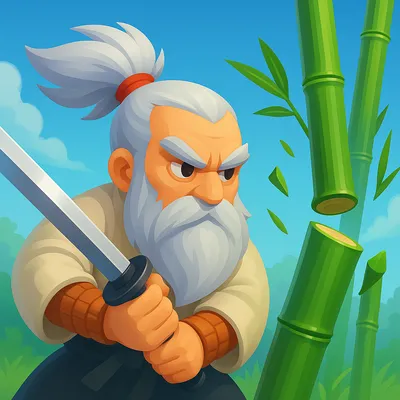
Ninja Slash is a perfect season game: skill-based, instantly readable, the kind of thing where a fresh leaderboard means a fresh wave of players genuinely competing. Every reset is another chance for tancro to climb back into the spotlight.
Why this is the right bet
Remix is an AI game maker and a game feed glued together. No-code game development means anyone can ship; seasons make sure that shipping keeps paying off long after launch day. The AI gets you a game in minutes. Seasons give that game a reason to matter for months.
That's the bet: recurring resets, no grind tax, recurring creator spotlight. Play, climb, reset. Then do it again.
Season two is coming. If you've been meaning to build something, build it now over at remix.gg. You'll want a game on the board when the ladder goes back to zero.
— Charlie